

Yes — keep flossing if your gums bleed. In most cases, bleeding gums during flossing signals that flossing is needed more, not less. Gums that have not been flossed regularly become inflamed and bleed on contact. Within 7–14 days of consistent daily flossing, bleeding stops in the majority of patients.
The exception: bleeding that continues beyond 14 days, worsens, or comes with swelling, pain, or gum recession needs a dentist. This guide covers 7 specific causes of flossing-related bleeding, the correct technique in 6 steps, and the 4 signs that mean you need professional care.
7 Reasons Your Gums Bleed When Flossing
Gum bleeding during flossing has 7 distinct causes. Identifying the right cause determines whether you continue, adjust technique, or see a dentist.
Cause 1: Infrequent Flossing — The Most Common Reason
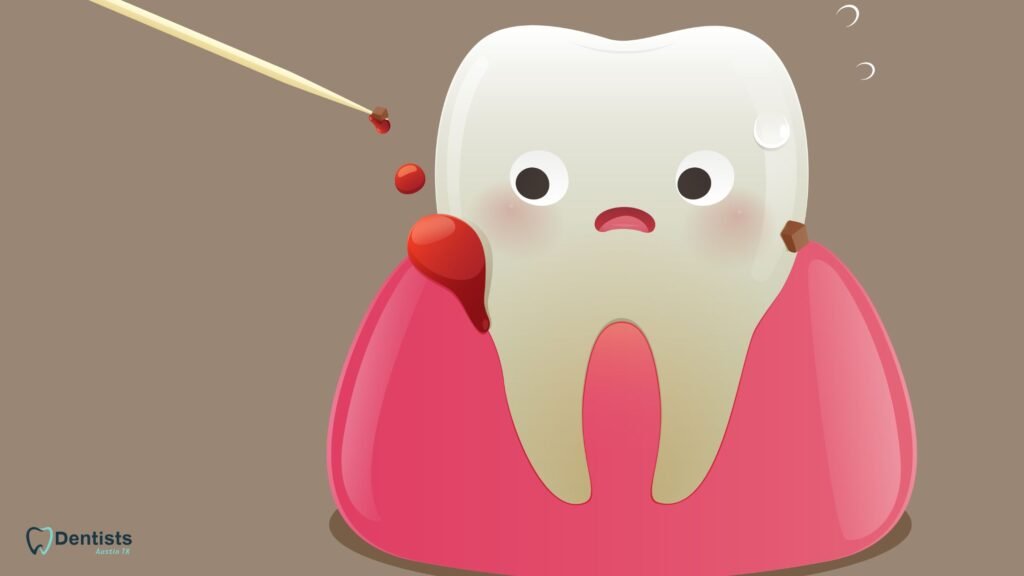
Gums bleed when flossed irregularly because the tissue becomes inflamed between sessions. The gum margin — the edge where gum meets tooth — becomes swollen with bacteria-loaded plaque. When the floss contacts this inflamed tissue for the first time in days, small blood vessels near the surface break open.
The fix: floss every day for 14 consecutive days. Most patients see complete bleeding resolution within this window. The tissue toughens and inflammation subsides with consistent daily mechanical disruption of the plaque.

Cause 2: Wrong Flossing Technique
Snapping or sawing floss aggressively into the gum causes direct tissue trauma and bleeds immediately. This is technique-related bleeding, not disease-related. It feels sharp, bleeds at contact, and stops quickly after flossing ends.
5 technique mistakes that cause bleeding:
- Snapping the floss straight down into the gum instead of sliding it gently
- Using a back-and-forth sawing motion at the gumline
- Flossing only the tooth surfaces and not curving the floss around each tooth
- Skipping the gumline contact entirely — plaque stays at the margin
- Using floss that is too thick for tight contact points between teeth
Cause 3: Plaque and Tartar Buildup
Hardened tartar at the gumline makes surrounding tissue chronically inflamed and highly sensitive to any contact. Even gentle, correct flossing bleeds against tartar-loaded gums. Professional cleaning (scaling and polishing) by a dental hygienist is the only way to remove tartar — brushing and flossing cannot break it down.
Cause 4: Gingivitis — Early Gum Disease
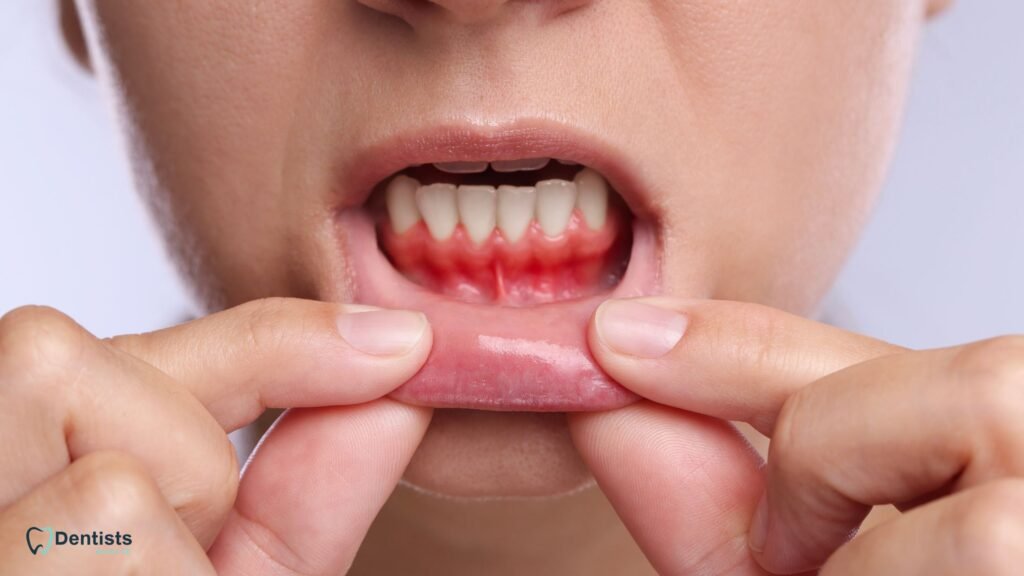
Gingivitis is inflammation of the gum tissue caused by bacterial infection at the gumline. The gums look red and puffy rather than pale pink and firm, bleed at the lightest touch, and may feel tender. Gingivitis (gum disease in its earliest stage) is fully reversible with professional cleaning and daily flossing — no surgery required.
The American Dental Association (ADA) estimates 47.2% of adults over 30 have some form of gum disease, most starting as untreated gingivitis.
Cause 5: Recent Professional Cleaning
Gums bleed more easily for 3–7 days after a professional cleaning because the hygienist removed hardened deposits that were mechanically protecting the gum surface. The tissue is temporarily sensitized. Continue flossing normally — the bleeding resolves within 1 week.
Cause 6: Medications That Thin the Blood
Aspirin, warfarin, clopidogrel, and some supplements (fish oil, vitamin E, ginkgo) reduce blood clotting and cause gums to bleed more easily during flossing. The bleeding is heavier than normal and takes longer to stop. Inform your dentist about all medications at your next appointment so the team can adjust care accordingly.
Cause 7: Pregnancy Gingivitis
Elevated estrogen and progesterone during pregnancy increase blood flow to gum tissue, making it swell and bleed more easily from weeks 6–24. This is called pregnancy gingivitis and affects up to 75% of pregnant women. Continue flossing — stopping allows plaque to accumulate, which worsens the condition. The bleeding typically resolves after delivery.
7 Causes: Quick Reference Table
| Cause | Bleeding Pattern | Other Signs | Fix |
| Infrequent flossing | First session after gap | None | Floss daily 14 days |
| Wrong technique | Sharp, immediate | Stops quickly | Fix technique below |
| Tartar buildup | Consistent, heavy | Visible deposits | Professional cleaning |
| Gingivitis | Easy, at light touch | Red, puffy gums | Dentist + daily floss |
| Post-cleaning | 3–7 days after visit | Temporary only | Continue flossing |
| Blood thinners | Slow to stop | Heavier than normal | Inform dentist |
| Pregnancy | Weeks 6–24 | Puffy, tender gums | Continue flossing |
Correct Flossing Technique: 6 Steps
Correct flossing technique prevents tissue trauma and removes plaque at the gumline. This 6-step method is the technique recommended by the American Dental Association (ADA).
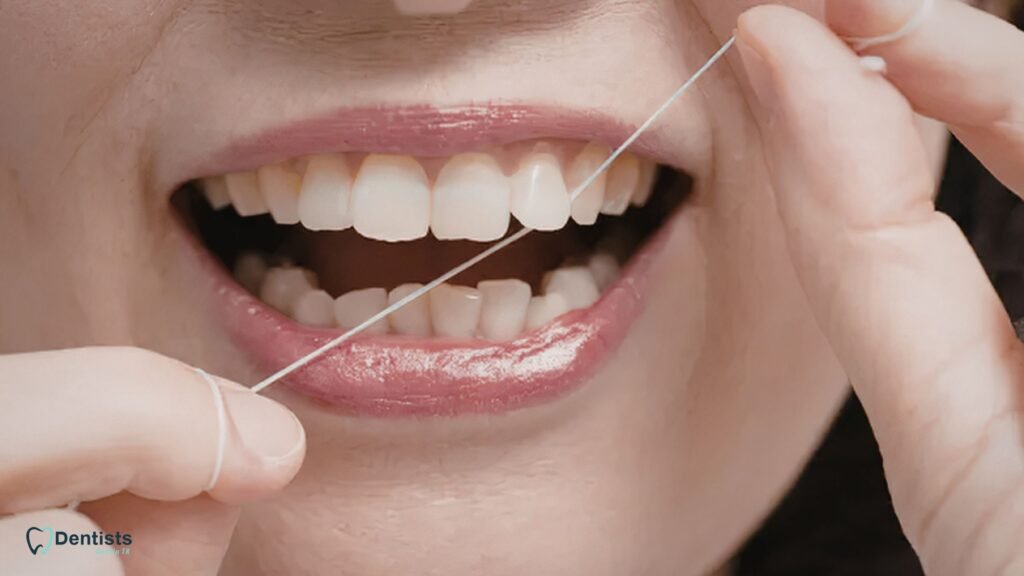
- Take 45 cm (18 inches) of floss. Wind most of it around the middle finger of one hand, the rest around the same finger of the other hand. This keeps clean sections of floss available for each tooth.
- Hold 2.5–3 cm (1 inch) of floss taut between thumbs and index fingers. Keep it firm enough to guide but not so tight it snaps.
- Slide — do not snap — the floss gently between teeth. Guide it with a back-and-forth zigzag motion as you ease it through the contact point. Never push straight down.
- Curve the floss into a C-shape against each tooth and slide it gently under the gumline 1–2 mm. Hold the C-shape as you move the floss up and down against the tooth surface 2–3 times.
- Move to a clean section of floss for every tooth. Using the same section transfers bacteria from one tooth gap to the next.
- Floss the back side of the last molar on each side. Most patients skip this area entirely — it is one of the most common sites for gum disease to begin.
| Floss Type Comparison: Which to Use Waxed string floss: Best for tight contact points, slides through without shredding, good for most adultsUnwaxed string floss: More friction, better plaque grip, recommended if contact points are looseWater flosser (Waterpik): Effective for braces, implants, and bridges; reduces bleeding in 14 days; does not replace string floss for plaque removal under gumlineFloss picks: Convenient but less effective — single angle limits C-shape technique; acceptable for daily use if string floss is not toleratedInterdental brushes: Best for gaps wider than 0.5 mm (1/50 inch); particularly effective for periodontitis patients with gum recession |
How Long Until Flossing Bleeding Stops?
Bleeding from infrequent flossing stops within 7–14 days of consistent daily flossing for most people. Here is what to expect by timeline:
Days 1–3
Bleeding is heaviest. The inflamed gum tissue is making contact with floss for the first time after a gap. Continue flossing at the same pressure — do not press harder to compensate.
Days 4–7
Bleeding visibly reduces. Plaque disruption allows gum tissue to begin recovering. Some spots may still bleed but less heavily.
Days 8–14
Most bleeding stops by day 14 as gum tissue toughens and inflammation resolves. If heavy bleeding persists beyond 14 days, the cause is not infrequent flossing — schedule a dental appointment.
4 Signs to Stop Flossing and See a Dentist
Stop flossing and call your dentist if any of these 4 signs are present. These indicate a condition that requires professional treatment, not more flossing.
- Bleeding persists beyond 14 days of consistent daily correct-technique flossing — gingivitis or periodontitis is likely
- Gums recede visibly — teeth look longer than before; this is bone loss from periodontitis, not reversible with flossing alone
- Bleeding is heavy or spontaneous — gums bleed without flossing, during eating, or when touched lightly; this is not normal at any stage
- Pus between teeth and gums — white or yellow discharge on floss confirms active periodontal infection needing professional irrigation and antibiotics
| When Gum Bleeding Is a Medical (Not Dental) Sign Gums that bleed spontaneously — without any contact — can indicate a blood clotting disorder or platelet abnormalitySudden severe gum bleeding without dental cause warrants a visit to a physician, not a dentistBlood thinners (warfarin, aspirin, clopidogrel) substantially increase gum bleeding — inform both your doctor and dentist before any dental procedureVitamin C deficiency (scurvy) causes gum bleeding; rare but documented in restricted diets |
How Often Should You Floss?
Floss once every day — not after every meal. Once daily is the clinical recommendation by the ADA because plaque takes approximately 24 hours to mature into the bacterial film that triggers gum inflammation. Flossing once per day disrupts this cycle before it causes harm.
3 facts about flossing frequency:
- Flossing removes plaque from 35–40% of tooth surfaces that a toothbrush cannot reach regardless of brushing technique
- The best time to floss is before brushing at night — this allows fluoride from toothpaste to penetrate the spaces between teeth after debris is cleared
- Flossing after every meal is unnecessary for healthy gums; it provides no additional benefit over daily flossing and can cause minor gum abrasion over time
5 Flossing Mistakes and How to Fix Them
Mistake 1: Snapping floss into the gum
Snap-and-release technique cuts gum tissue and causes immediate sharp bleeding. Fix: guide floss through the contact point with a gentle back-and-forth zigzag motion, never straight downward force.
Mistake 2: Skipping the gumline
Flossing only the visible space between teeth leaves plaque at the gumline — the most critical area. Fix: curve the floss into a C-shape and insert it 1–2 mm below the gum margin on each tooth.
Mistake 3: Reusing the same floss section
Using the same 2.5 cm (1 inch) of floss between every tooth transfers bacteria from one contact point to the next. Fix: advance to a clean section of floss before moving to each new tooth.
Mistake 4: Flossing too fast
Rushing through 32 teeth in 30 seconds means the floss never contacts the gumline properly. Fix: allow 1–2 seconds of contact per tooth surface — full flossing should take 60–90 seconds.
Mistake 5: Stopping because it hurts
Avoiding the areas that bleed most allows the most plaque to accumulate in the most inflamed areas. Fix: give the bleeding areas more attention, not less. Rinse with water after flossing — never substitute mouthwash for physical plaque removal.

Frequently Asked Questions
Yes, continue flossing daily. Gums that bleed every time are inflamed from consistent plaque contact. Daily flossing disrupts the plaque cycle and reduces bleeding within 7–14 days. If bleeding continues beyond 14 days of correct daily flossing, see a dentist for a periodontal evaluation.
Yes. Gums that have never been flossed or have not been flossed in weeks are inflamed and bleed at first contact. This is a sign of healthy inflammation response, not injury. The bleeding resolves within 7–14 days of consistent daily flossing.
No. Flossing does not cause or worsen gum disease. Stopping flossing because of bleeding does worsen gum disease — plaque accumulates faster in the absence of mechanical disruption. The only scenario where flossing causes harm is incorrect technique causing direct tissue trauma, which heals quickly.
Waxed string floss slides through tight contacts without shredding and is the most widely recommended type for bleeding gums. A water flosser used alongside string floss reduces gingival bleeding by 52% compared to string floss alone, according to a 2013 study in the Journal of Clinical Dentistry. Water flossers do not replace string floss for subgingival plaque removal.
7 to 14 days of consistent correct-technique flossing resolves bleeding from plaque-related inflammation. Bleeding from tartar buildup, gingivitis, or periodontitis requires professional cleaning before home flossing can fully control it.
Mouthwash does not replace flossing and does not stop gum bleeding. Antiseptic mouthwashes (chlorhexidine) reduce bacterial load temporarily but cannot remove plaque physically. Use mouthwash after brushing and flossing — never as a substitute for either.
| Quick Reference: Keep Flossing vs. See a Dentist Keep flossing: Bleeding started within the past 14 days of daily flossingKeep flossing: Bleeding only occurs during flossing, stops within 60 secondsKeep flossing: No pain, no swelling, no visible gum changesSee a dentist: Bleeding persists beyond 14 days of correct daily flossingSee a dentist: Gums recede or teeth look longer than beforeSee a dentist: Pus visible between teeth and gumsSee a dentist: Bleeding is spontaneous or occurs without contact |