
Natural Results | Stain-Resistant | Long-Lasting
Dental Veneers in Austin TX — Transform Your Smile Today
Porcelain veneers are thin shells bonded to front tooth surfaces transforming color, shape, size, and alignment. Custom-designed veneers create natural-looking, Hollywood-quality smiles that last 10-15 years.
Fix multiple cosmetic issues in one treatment. Veneers correct stains, chips, gaps, and mild misalignment—creating the smile you've always wanted. Call +1 (737) 332-4098 for porcelain veneers in Austin TX today.
What Are Dental Veneers?
Veneers are ultra-thin porcelain shells (0.5-1mm thick) custom-made to cover front tooth surfaces. They bond permanently to teeth, transforming appearance while preserving most natural tooth structure.
How Veneers Work:
Structure:
- Thin porcelain shell (thickness of contact lens)
- Custom-designed for each tooth
- Color-matched to your preferences
- Natural translucency mimics real teeth
Bonding process:
- Minimal enamel removal (0.5mm)
- Special cement bonds veneer to tooth
- Permanent attachment
- Becomes part of tooth structure
Veneers look and function like natural teeth—no one can tell the difference.
What Dental Veneers Fix
Permanent Tooth Discoloration
Stains that don’t respond to whitening:
- Tetracycline staining (gray-brown bands)
- Fluorosis (white/brown spots)
- Dead teeth (internal discoloration)
- Severe yellowing from aging
- Medication-induced stains
Veneers cover stains completely with bright white porcelain.
Chipped or Worn Teeth
Damage from:
- Accidents and trauma
- Grinding teeth (bruxism)
- Acid erosion
- Years of wear
- Sports injuries
Veneers restore:
- Original tooth length
- Proper shape
- Smooth edges
- Youthful appearance
One veneer repairs a chip; full set rejuvenates entire smile.
Gaps Between Teeth (Diastema)
Close spaces without orthodontics:
- Front tooth gaps
- Multiple small spaces
- Gaps from small teeth
Veneers slightly widen teeth to close gaps instantly.
Slightly Crooked or Misaligned Teeth
Veneers create illusion of straight teeth:
- Minor rotations
- Slight overlapping
- Uneven tooth lengths
- Teeth too small or large
Not a substitute for orthodontics but masks minor alignment issues beautifully.
Combination approach: Invisalign straightens teeth, then veneers perfect them.
Learn about Invisalign →
Misshaped or Irregular Teeth
Improve tooth proportions:
- Peg laterals (small pointy teeth)
- Short teeth
- Uneven tooth sizes
- Teeth too narrow or wide
- Oddly shaped teeth
Veneers create ideal proportions following dental golden ratio principles.
Uneven Gum Line
Combined with gum recontouring:
- Even out gum heights
- Create symmetrical smile
- Lengthen short teeth
- Balance tooth-to-gum ratio
Gummy smile correction often combines gum reshaping with veneers.
Types of Veneers
High-quality ceramic material custom-fabricated in dental lab.
Advantages:
- Most natural appearance
- Light-reflecting properties match real teeth
- Highly stain-resistant
- Very durable (10-15 years)
- Strong and chip-resistant
- Gum-friendly material
Process:
- 2-3 appointments over 2-3 weeks
- Custom design and color selection
- Temporary veneers while permanent ones made
- Lab fabrication (2 weeks)
- Final bonding appointment
Cost: $1,000-$1,500 per tooth
Best for: Patients wanting highest quality and longest-lasting results.
Ultra-thin porcelain veneers (Lumineers, Vivaneers) requiring little to no tooth preparation.
Advantages:
- Minimal or no enamel removal
- Less invasive
- Sometimes reversible
- No temporaries needed
Limitations:
- Can look bulky (thicker than traditional)
- Not suitable for severe discoloration
- Limited color change capability
- May not last as long
Cost: $800-$1,200 per tooth
Best for: Patients wanting conservative approach and have mild cosmetic issues.
Tooth-colored resin applied directly to teeth (similar to bonding).
Advantages:
- Completed in one appointment
- Less expensive ($250-$600 per tooth)
- Minimal tooth preparation
- Repairable if damaged
Disadvantages:
- Less natural appearance than porcelain
- Stain over time (need polishing)
- Less durable (5-7 years)
- Chip more easily
Best for: Budget-conscious patients or temporary solutions.
The Veneer Process
Consultation and Smile Design (60 minutes)
We discuss your goals:
- What do you want to change?
- Shape preferences
- Color preferences
- Number of veneers needed
- Budget and timeline
Comprehensive examination:
- Current oral health
- Tooth structure evaluation
- Bite analysis
- Photos from multiple angles
- X-rays if needed
Digital smile design:
- Computer preview of new smile
- Try different shapes and colors
- See expected results before treatment
- You approve design before proceeding
Treatment planning:
- Number of veneers recommended
- Additional treatments needed (gum recontouring)
- Timeline
- Cost breakdown
No pressure—just education and visualization.
Tooth Preparation (60-90 minutes)
First treatment appointment:
Step 1: Anesthesia
- Local numbing (painless procedure)
- Optional sedation available
Step 2: Enamel Removal
- 0.5mm removed from front surface
- Creates space for veneer
- Ensures natural-looking result
- Minimal tooth alteration
Step 3: Impressions
- Detailed molds of prepared teeth
- Sent to dental lab
- Custom veneers fabricated
Step 4: Temporary Veneers
- Plastic temporaries bonded on
- Protect prepared teeth
- Preview new smile
- Allow you to test drive results
You leave with temporary veneers—never without a smile.
Temporary period: 2 weeks while permanent veneers are crafted.
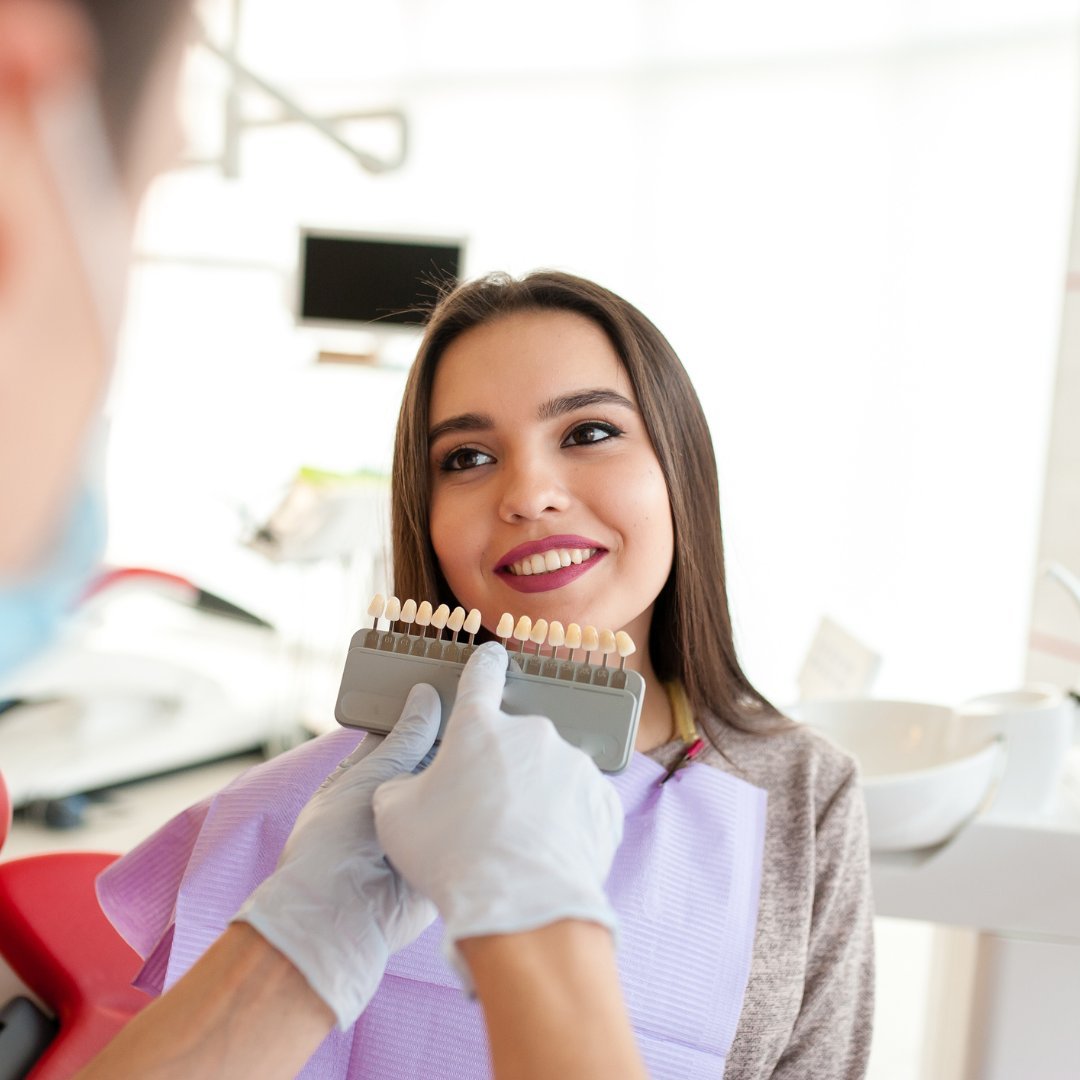
Try-In and Bonding (90-120 minutes)
Final appointment when veneers return from lab:
Step 1: Try-In
- Temporary veneers removed
- Permanent veneers placed (not bonded yet)
- Check fit, color, and shape
- Make any adjustments
- Your approval required
Step 2: Final Bonding
- Teeth cleaned and prepared
- Special bonding agent applied
- Veneers permanently cemented
- Excess cement removed
- Light-cured for strong bond
Step 3: Final Adjustments
- Bite verified and adjusted
- Polishing for smoothness
- Final inspection
Step 4: Instructions
- Care guidelines
- Foods to avoid initially
- Follow-up scheduling
You leave with your perfect new smile.
Caring for Dental Veneers
First 24-48 Hours:
Avoid staining foods:
- Coffee and tea
- Red wine
- Dark sodas
- Tomato sauce
- Berries
Bonding cement cures fully over 24 hours—avoid potential stains during this time.
Eat soft foods:
- Avoid very hard foods
- No biting into hard objects
- Let bite settle
Normal sensitivity:
- Mild temperature sensitivity normal
- Resolves within few days
- Contact us if severe
Long-Term Veneer Care:
Daily oral hygiene:
- Brush twice daily (soft brush)
- Floss once daily (veneer-gum border)
- Non-abrasive toothpaste
- Regular mouthwash
Professional cleanings:
- Every 6 months
- Professional polishing
- Check veneer integrity
Protect your investment:
- Wear night guard if grinding teeth
- Don't chew ice or hard candy
- Don't use teeth as tools
- Don't bite fingernails
Foods to minimize:
- Very hard foods (may chip veneers)
- Extremely sticky foods
- Staining beverages (though veneers resist stains)
Veneers are durable but not indestructible—treat like natural teeth.
How Long Do Veneers Last?
Expected Lifespan:
Porcelain veneers:
- 10-15 years average
- Some last 20+ years
- Depends on care and habits
Composite veneers:
- 5-7 years
- May need earlier replacement
Factors Affecting Longevity:
Positive factors:
- Excellent oral hygiene
- Regular dental visits
- Wearing night guard (if grinding)
- Avoiding hard foods
- Not smoking
- Good overall health
Negative factors:
- Teeth grinding (wears veneers)
- Chewing hard objects
- Poor oral hygiene
- Gum disease (receding gums expose margins)
- Smoking (stains cement line)
- Nail biting
Veneer Replacement:
Eventually veneers need replacement:
- Normal wear over time
- Cement breakdown
- Desire to update appearance
Replacement process:
- Old veneers removed
- New impressions taken
- New veneers fabricated
- Same bonding process
Good news: Replacement is straightforward since tooth already prepared.
Veneers vs. Other Cosmetic Options
Veneers vs. Teeth Whitening:
Whitening:
- Changes only color
- Doesn’t fix chips, gaps, or shape
- Results fade (need touch-ups)
- Less expensive ($200-$600)
- Quick (hours to weeks)
Veneers:
- Change color, shape, size, alignment
- Fix multiple issues simultaneously
- Permanent color (stain-resistant)
- More expensive ($1,000-$1,500 per tooth)
- 2-3 weeks process
When to choose: Veneers for comprehensive improvement; whitening for color only.
Compare with teeth whitening →
Veneers vs. Dental Bonding:
Bonding:
- Direct resin application
- Single appointment
- Less expensive ($200-$400)
- Less durable (5-7 years)
- Stains over time
- Less natural appearance
Veneers:
- Lab-fabricated porcelain
- 2-3 appointments (2-3 weeks)
- More expensive ($1,000-$1,500)
- Very durable (10-15 years)
- Stain-resistant
- Most natural appearance
When to choose: Bonding for minor fixes and budget; veneers for extensive improvements.
Compare with dental bonding →
Veneers vs. Crowns:
Crowns:
- Cover entire tooth
- Require significant tooth removal
- Restore function and appearance
- Used for damaged teeth
- Cost $1,200-$1,800
Veneers:
- Cover front surface only
- Minimal tooth removal (0.5mm)
- Purely cosmetic
- Used for healthy teeth
- Cost $1,000-$1,500
When to choose: Crowns for damaged teeth needing restoration; veneers for healthy teeth needing aesthetic improvement.
Veneers vs. Orthodontics:
Orthodontics (braces/Invisalign):
- Moves teeth to proper positions
- Corrects bite problems
- Takes 12-24 months
- Costs $3,000-$8,000
- Permanent tooth movement
Veneers:
- Create illusion of straight teeth
- Don’t correct bite
- Take 2-3 weeks
- Cost $6,000-$12,000 (full set)
- Mask alignment (don’t move teeth)
When to choose: Orthodontics for severe misalignment and bite issues; veneers for mild cosmetic concerns when speed matters.
Best results often combine both approaches.
Dental Veneer Cost in Austin TX
Veneer Pricing:
Porcelain veneers:
- Per tooth: $1,000-$1,500
- 2 front teeth: $2,000-$3,000
- 4-6 teeth (upper smile): $4,000-$9,000
- 8-10 teeth (full smile): $8,000-$15,000
Minimal-prep veneers:
- Per tooth: $800-$1,200
Composite veneers:
- Per tooth: $250-$600
Additional Costs:
Gum recontouring (if needed):
- Per tooth: $50-$200
- Improves gum line symmetry
Temporary veneers:
- Usually included in total cost
Consultation and design:
- Often complimentary
Insurance Coverage:
Veneers are cosmetic and rarely covered by dental insurance.
Exception: If veneer restores function (severely damaged tooth), partial coverage possible.
Most patients pay out-of-pocket.
Financing Options:
Make veneers affordable:
- CareCredit 0% interest (6-24 months)
- In-house payment plans
- Third-party financing
- Low monthly payments
Don’t let cost prevent your dream smile—financing available.
Dental Veneer – FAQs
Yes, veneers are permanent because enamel must be removed during preparation. This makes the process irreversible—teeth always need veneers (or crowns) afterward. However, veneers themselves need replacement every 10-15 years as they wear or cement breaks down.
No, modern porcelain veneers look completely natural when properly designed. High-quality porcelain mimics natural tooth translucency and light reflection. We customize shape, size, and color to your facial features. Only you and your dentist know—everyone else just sees a beautiful smile.
Veneers can mask mild misalignment by creating the illusion of straight teeth. They're ideal for minor rotations, uneven lengths, or slight overlapping. Severe misalignment, bite problems, or significant crowding require orthodontics first. Veneers are cosmetic, not orthodontic treatment.
Number depends on your goals:
- 2 veneers: Fix front teeth only
- 4 veneers: Upper central and lateral incisors
- 6-8 veneers: Full upper smile zone
- 8-10 veneers: Complete upper smile
- 16-20 veneers: Upper and lower full smile
Most patients get 6-8 upper veneers. We help determine ideal number during consultation.
No, veneers don't damage teeth when properly placed. We remove only 0.5mm of enamel (about thickness of fingernail)—similar to natural wear over time. Enamel removal is conservative and necessary for natural-looking results. Teeth remain healthy and strong under veneers.
Yes, eat normally once veneers are bonded. Veneers are very strong and withstand normal chewing forces. Avoid extremely hard foods (ice, hard candy, nuts with shells) that might chip veneers. Don't use teeth as tools. Otherwise, eat your regular diet without restriction.
Broken veneers can usually be replaced individually without affecting other veneers. We remove the damaged veneer, take new impression, and fabricate replacement. Process takes 2-3 weeks with temporary veneer in place. Proper care minimizes breakage risk—veneers are quite durable.
Porcelain veneers are highly stain-resistant and don't discolor like natural teeth. However, the cement line where veneer meets tooth can stain with poor hygiene. Regular brushing, flossing, and cleanings prevent staining at margins. Coffee, wine, and tea don't stain porcelain but maintain good oral hygiene.
No, veneer placement is painless with local anesthesia. You feel no discomfort during tooth preparation or bonding. Mild sensitivity after anesthesia wears off is normal for 24-48 hours. Some patients experience temperature sensitivity for few days. No ongoing pain—veneers feel completely natural.
No, porcelain veneers can't be whitened once made. The color is permanent. If you want whiter teeth, do professional whitening before getting veneers—we'll match veneers to your whitened shade. If veneers discolor (rare), they need replacement, not whitening.
Transform Your Smile with Veneers
Porcelain veneers create smile transformations that boost confidence and change lives. Natural-looking results last 10-15 years with proper care.
See your new smile before treatment begins.