
Same-Day Results | Affordable | Natural Appearance
Dental Bonding Austin TX – Same-Day Smile Improvement
Dental bonding uses tooth-colored resin to repair chips, close gaps, and improve tooth appearance in a single appointment. This affordable, minimally invasive cosmetic treatment provides immediate results without extensive tooth preparation.
Transform your smile in one visit. Bonding fixes minor cosmetic flaws quickly and affordably—no weeks of waiting. Call +1 (737) 332-4098 for dental bonding in Austin TX today.
What Is Dental Bonding?
Tooth-colored composite resin material sculpted directly onto teeth to improve appearance and function.
How Bonding Works:
Material:
- Composite resin (same as tooth-colored fillings)
- Available in multiple shades
- Matched to your natural tooth color
- Bonds chemically to tooth structure
Process:
- Tooth surface roughened (etched)
- Bonding liquid applied
- Resin shaped and molded
- UV light hardens material
- Polished smooth
Completed in 30-60 minutes per tooth—immediate smile improvement.
What Dental Bonding Fixes
- Chipped Teeth
- Small Gaps Between Teeth
- Tooth Discoloration
- Slightly Misshapen Teeth
- Exposed Tooth Roots
- Lengthen Teeth
Most common use for bonding.
Repairs chips from:
- Biting hard foods
- Falls and accidents
- Sports injuries
- Grinding teeth
- Normal wear over time
Bonding restores:
- Original tooth shape
- Smooth edges
- Natural appearance
- Protection from further damage
Single chipped tooth: $200-$400 to repair
Multiple chips: Can be fixed same appointment
Close minor spaces without orthodontics.
Ideal for:
- Front tooth gaps (diastema)
- Small spaces between teeth
- Gaps from narrow teeth
- Multiple small spaces
Bonding slightly widens teeth to close gaps instantly.
Alternatives:
- Orthodontics: 12-24 months, $3,000-$8,000
- Veneers: 2-3 weeks, $1,000-$1,500 per tooth
- Bonding: Same day, $200-$400 per tooth
Fastest, most affordable gap solution for minor spacing.
Covers stains bonding doesn’t remove.
Treats:
- Single dark tooth (often from trauma)
- White spots (fluorosis, demineralization)
- Small stained areas
- Intrinsic stains on one or two teeth
Limitations:
- Not for whole-mouth whitening
- May discolor over time (3-5 years)
- Professional whitening better for overall color
Best for: Isolated discoloration on 1-3 teeth
Compare with teeth whitening →
Improve tooth proportions and shape.
Corrects:
- Peg laterals (small pointy teeth)
- Short teeth
- Teeth too narrow
- Uneven tooth lengths
- Oddly shaped teeth
Bonding adds material to create ideal proportions.
Alternatives:
- Veneers: More durable, more expensive
- Crowns: For severely misshapen teeth
Cover sensitive roots from gum recession.
Benefits:
- Reduces sensitivity
- Protects exposed dentin
- Improves appearance
- Prevents further wear
Bonding applied to root surface where gums have receded.
Often combined with gum grafting for comprehensive treatment.
Make worn or short teeth appear longer.
Treats:
- Teeth worn from grinding
- Naturally short teeth
- Uneven tooth lengths
- Aged, worn smiles
Bonding builds up edges restoring youthful appearance.
Alternative: Veneers for more extensive lengthening
The Dental Bonding Procedure
Consultation (15-30 minutes)
We evaluate your concerns:
- What bothers you about your smile?
- Which teeth need improvement?
- Your aesthetic goals
- Budget considerations
Examination:
- Tooth health assessment
- Bonding suitability
- Color selection
- Treatment planning
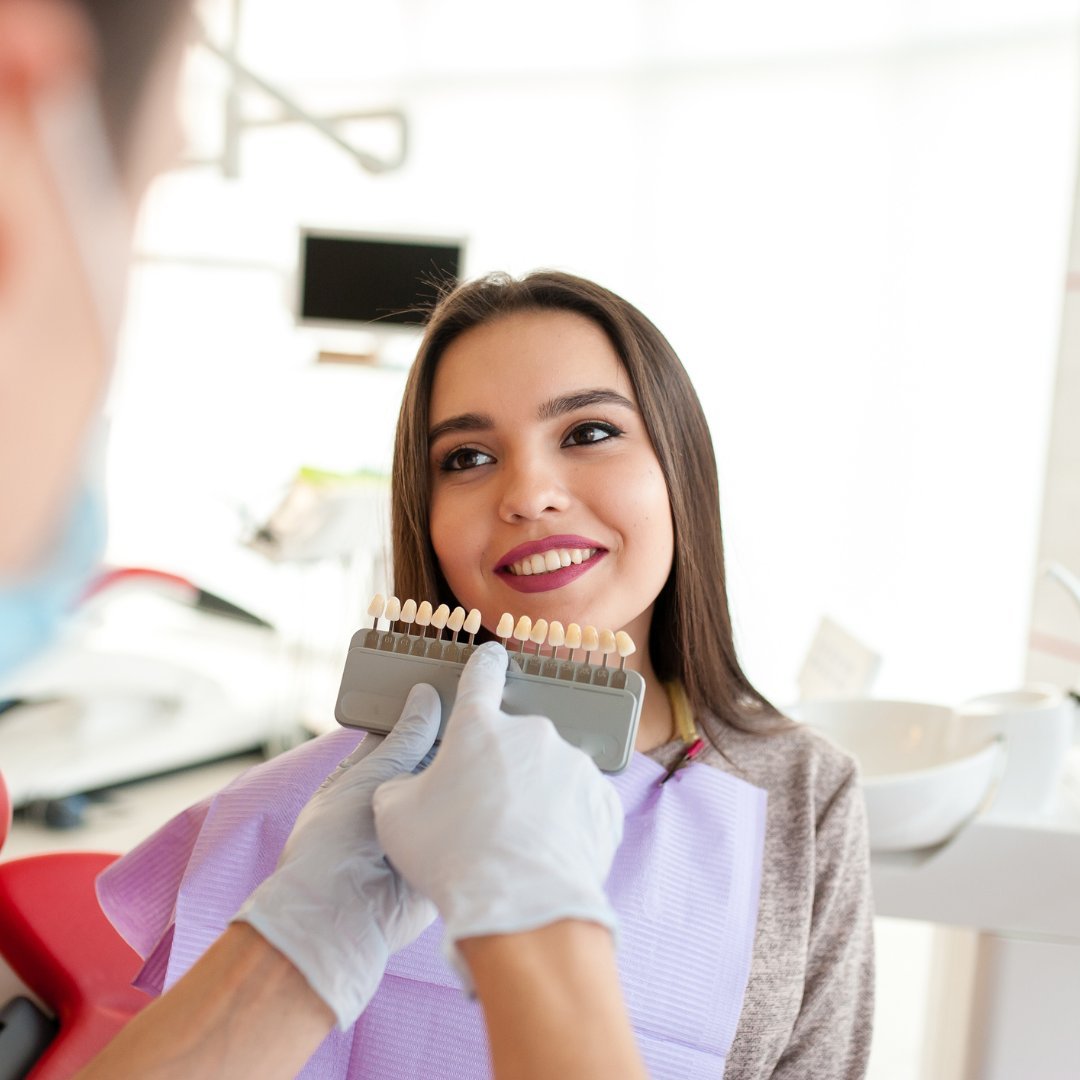
Color matching:
- Shade guide used
- Match to adjacent teeth
- Consider whitening first if desired
- Your approval required
Bonding works best when teeth are healthy—any cavities treated first.
Tooth Preparation (5-10 minutes)
Minimal preparation required:
Step 1: Cleaning
- Tooth surface cleaned thoroughly
- Polished to remove debris
Step 2: Etching
- Mild acid gel applied (30-60 seconds)
- Creates rough surface for bonding
- Rinsed and dried
Step 3: Bonding Agent
- Liquid bonding agent painted on
- Ensures strong resin adhesion
Usually no anesthesia needed—bonding typically painless.
Little to no tooth structure removed—conservative treatment preserving natural tooth.
Bonding Application (20-40 minutes)
Step 1: Resin Application
- Tooth-colored composite applied
- Putty-like consistency
- Layered if needed
Step 2: Sculpting and Shaping
- Dentist molds material
- Creates natural tooth contours
- Matches adjacent teeth
- Artistic shaping
Step 3: Hardening
- UV light cures each layer (20-40 seconds)
- Multiple layers if needed
- Each layer hardened separately
Step 4: Final Shaping
- Excess material trimmed
- Refined for proper shape
- Bite adjusted
Step 5: Polishing
- Smoothed to natural shine
- Blended with adjacent teeth
- Final inspection
Total time: 30-60 minutes per tooth
Multiple teeth bonded same appointment if desired.
Final Result
Immediate smile improvement:
- Natural appearance
- Smooth surface
- Proper bite
- Enhanced confidence
You leave with completed treatment—no waiting period or second appointment.
Caring for Bonded Teeth
First 24-48 Hours:
Avoid staining foods:
- Coffee and tea
- Red wine
- Dark sodas
- Berries
- Tomato sauce
- Curry
Bonding material porous initially—stains absorb easily during curing period.
Eat soft foods:
- Avoid very hard foods
- No biting into hard objects
- Let bonding fully set
Normal sensitivity:
- Slight temperature sensitivity possible
- Should resolve quickly
- Contact us if severe
Long-Term Bonding Care:
Daily oral hygiene:
- Brush twice daily (soft brush)
- Floss once daily
- Non-abrasive toothpaste
- Regular mouthwash
Avoid damaging habits:
- Don’t chew ice
- Don’t bite fingernails
- Don’t use teeth as tools
- Don’t chew pens or pencils
Protect bonding:
- Wear night guard if grinding teeth
- Wear mouthguard for sports
- Minimize staining beverages
- Don’t smoke (stains bonding)
Professional care:
- Dental cleanings every 6 months
- Professional polishing
- Check bonding integrity
- Touch-up if needed
Bonding lasts longer with proper care.
How Long Does Dental Bonding Last?
Expected Lifespan:
Bonding typically lasts 5-7 years with proper care.
Factors affecting longevity:
Positive factors:
- Excellent oral hygiene
- Avoiding staining foods
- Not smoking
- Wearing night guard (if grinding)
- Regular dental visits
- Conservative chewing habits
Negative factors:
- Teeth grinding or clenching
- Biting hard objects
- Poor oral hygiene
- Heavy coffee/tea/wine consumption
- Smoking
- Using teeth as tools
Signs Bonding Needs Replacement:
Visual changes:
- Discoloration or staining
- Rough texture
- Visible chip or crack
- Gap at bonding-tooth junction
Functional issues:
- Bonding feels loose
- Catches on floss
- Sharp edges develop
- Part breaks off
Replacement straightforward:
- Old bonding removed
- New bonding applied
- Same process as initial placement
- 30-60 minutes per tooth
Veneers vs. Other Cosmetic Options
Bonding vs. Veneers:
Bonding advantages:
- Same-day completion
- Much less expensive ($200-$400 vs. $1,000-$1,500)
- Minimal tooth preparation
- Reversible
- Good for minor corrections
Bonding limitations:
- Less durable (5-7 years vs. 10-15)
- Stains over time
- Less natural appearance
- Chips more easily
Veneers advantages:
- Superior aesthetics
- Highly stain-resistant
- Very durable
- Better for extensive changes
Veneers limitations:
- More expensive
- Requires two appointments (2-3 weeks)
- Permanent (enamel removed)
- More invasive
Choose bonding for: Minor repairs, budget-conscious, quick fixes
Choose veneers for: Extensive changes, longest-lasting results, best aesthetics
Compare with porcelain veneers →
Bonding vs. Crowns:
Bonding:
- Covers front surface only
- Minimal tooth removal
- Cosmetic only
- $200-$400
Crowns:
- Cover entire tooth
- Significant tooth removal
- Restore function and appearance
- $1,200-$1,800
Choose bonding for: Healthy teeth needing minor cosmetic improvement
Choose crowns for: Damaged teeth needing strength and protection
Bonding vs. Fillings:
Similar materials but different purposes:
Bonding (cosmetic):
- Improves appearance
- Front teeth typically
- Elective treatment
- Insurance rarely covers
Fillings (restorative):
- Repairs cavities
- Any tooth
- Necessary treatment
- Insurance covers 70-80%
Both use composite resin—technique and purpose differ.
Learn about dental fillings →
Dental Bonding Cost in Austin TX
Bonding Pricing:
Per tooth:
- Small repair (chip): $200-$300
- Moderate bonding (gap closure): $300-$400
- Extensive bonding (reshape): $350-$450
Multiple teeth:
- 2 teeth: $400-$800
- 4 teeth: $800-$1,600
- Volume discounts often available
Additional costs:
- Consultation: Usually complimentary
- X-rays (if needed): $25-$100
- Teeth cleaning (if needed): $100-$200
Insurance Coverage:
Bonding is usually cosmetic and not covered by insurance.
Exception: If bonding repairs damage affecting function (chipped tooth causing bite problems), partial coverage possible.
Most patients pay out-of-pocket.
Financing Options:
Affordable payment plans:
- CareCredit 0% interest (6-12 months)
- In-house payment plans
- Split cost over several months
Bonding is most affordable cosmetic option—immediate results without major investment.
Advantages of Dental Bonding
Same-Day Results
No waiting weeks for results:
- Single appointment
- 30-60 minutes per tooth
- Immediate smile improvement
- No temporaries needed
- No lab work required
Perfect for urgent situations:
- Wedding next week
- Job interview coming up
- Photo session scheduled
- Special event approaching
Affordable Cosmetic Solution
Most budget-friendly option:
- $200-$400 per tooth
- Fraction of veneer cost
- No lab fees
- Minimal overhead
Accessible to more patients than expensive cosmetic treatments.
Minimally Invasive
Preserves natural tooth structure:
- Usually no drilling required
- Minimal enamel removal
- Reversible procedure
- Conservative approach
Ideal for young patients where preserving tooth structure important.
Versatile Treatment
Fixes multiple issues:
- Chips and cracks
- Gaps and spaces
- Discoloration
- Misshapen teeth
- Short teeth
- Exposed roots
One procedure, many solutions.
Natural Appearance
When done well, bonding looks natural:
- Color-matched to adjacent teeth
- Blends seamlessly
- Shaped to match natural contours
- Polished to natural shine
Most people can’t tell bonding from natural teeth.
Repairable
If damaged, bonding easily fixed:
- Touch-up bonding added
- Complete replacement if needed
- Quick repair process
- Minimal cost for small fixes
Unlike veneers requiring complete replacement.
Limitations of Dental Bonding
Less Durable Than Alternatives
Bonding chips and stains more easily:
- 5-7 year lifespan vs. 10-15 for veneers
- More susceptible to damage
- Requires periodic replacement
- Not ideal for heavy chewing forces
Best for low-stress areas—front teeth and minimal biting forces.
Stains Over Time
Composite resin absorbs stains:
- Coffee, tea, red wine
- Tobacco products
- Berries and tomato sauce
- Accumulates over 3-5 years
Professional polishing helps but eventually replacement needed.
Not Suitable for Extensive Changes
Bonding has limits:
- Can’t dramatically change tooth position
- Limited color change capability
- Not for severe discoloration
- Won’t work for very damaged teeth
Veneers or crowns better for major transformations.
Less Natural Than Veneers
Composite lacks porcelain’s optical properties:
- Less translucency
- Different light reflection
- Can look slightly duller
- May not perfectly match adjacent teeth
Still natural-looking but not as ideal as high-quality veneers.
Dental Bonding – FAQs
Bonding takes 30-60 minutes per tooth and is completed in a single appointment. Multiple teeth can be bonded during the same visit. No second appointment needed—you leave with completed treatment. Perfect for busy schedules.
No, bonding is painless and usually requires no anesthesia. We only roughen tooth surface (no drilling). You feel no discomfort during procedure. Some patients experience mild sensitivity for 24-48 hours afterward. Much less invasive than crowns or veneers.
Bonding costs $200-$400 per tooth depending on extent of work. Small chip repairs cost $200-$300. Larger bonding (gap closure, reshaping) costs $300-$450. Multiple teeth may receive volume discounts. Most affordable cosmetic dental option.
Yes, bonding can stain over time especially with coffee, tea, wine, and tobacco. Composite resin is slightly porous and absorbs pigments. Staining typically develops over 3-5 years. Professional polishing helps temporarily. Eventually replacement needed if staining severe.
Yes, bonding is ideal for chipped teeth. Composite resin rebuilds missing tooth structure, restores original shape, and blends naturally with your tooth. Most chip repairs take 30-45 minutes. Results are immediate and natural-looking. Cost is $200-$400 depending on chip size.
Care for bonding like natural teeth: Brush twice daily, floss once daily, regular dental cleanings. Avoid biting hard objects, chewing ice, or using teeth as tools. Minimize staining foods/drinks. Wear night guard if grinding teeth. Good care extends bonding lifespan.
No, bonding can't be whitened once placed. The color is permanent. If you want whiter teeth, do professional whitening before bonding—we'll match bonding to your whitened shade. If bonding stains significantly, it needs replacement, not whitening.
Depends on your priorities: Bonding is better for minor repairs, budget constraints, same-day results, and preserving tooth structure. Veneers are better for extensive changes, longest-lasting results, best aesthetics, and stain resistance. We help you choose based on your situation.
Bonding typically lasts 5-7 years with proper care. Longevity depends on location, oral habits, and maintenance. Front teeth last longer than back teeth. Avoiding hard foods, not grinding, and good hygiene extend lifespan. Replacement is straightforward when needed.
Yes, bonding can debond from teeth though uncommon with proper placement. Usually happens from trauma, biting hard objects, or poor oral hygiene. If bonding falls off, save it and call immediately. We can often rebond the piece or apply new bonding same-day.
Get Same-Day Smile Improvement
Dental bonding fixes minor cosmetic flaws quickly and affordably. Transform chips, gaps, and discoloration in a single appointment without breaking the bank.